Gustan Eden – Transforming Urban Spaces – Skateboarding Initiative
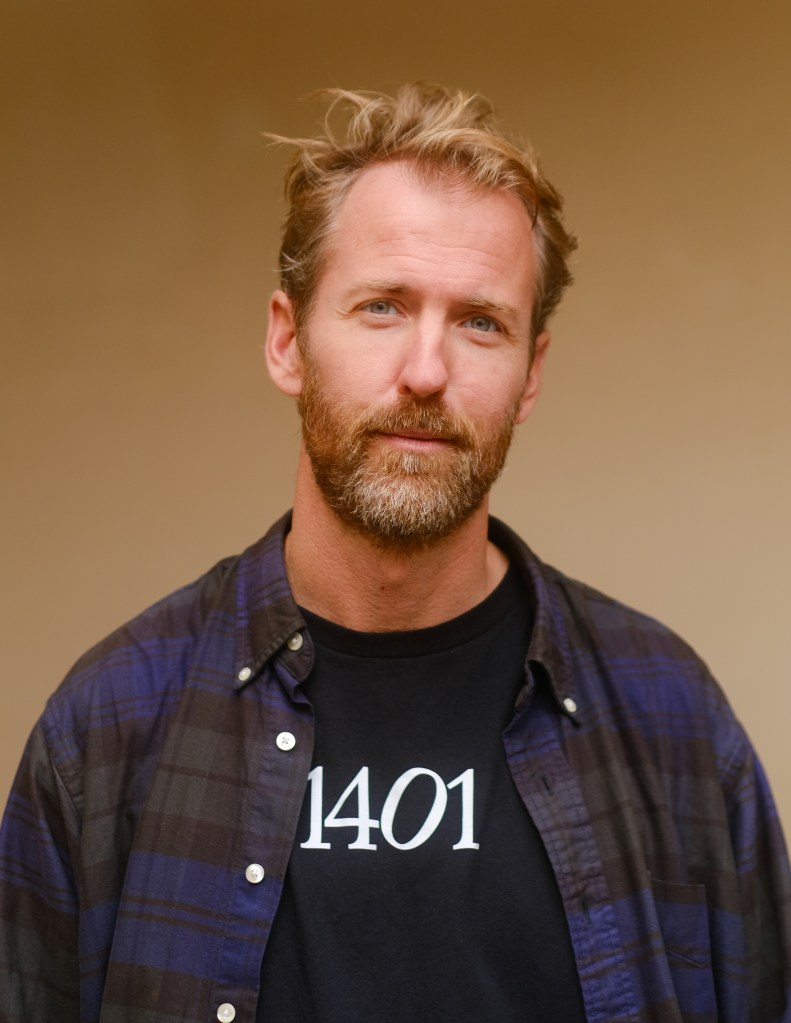
Interview Charles Paratte – Portrait Charles Paratte – Skate Photos : William Paladino
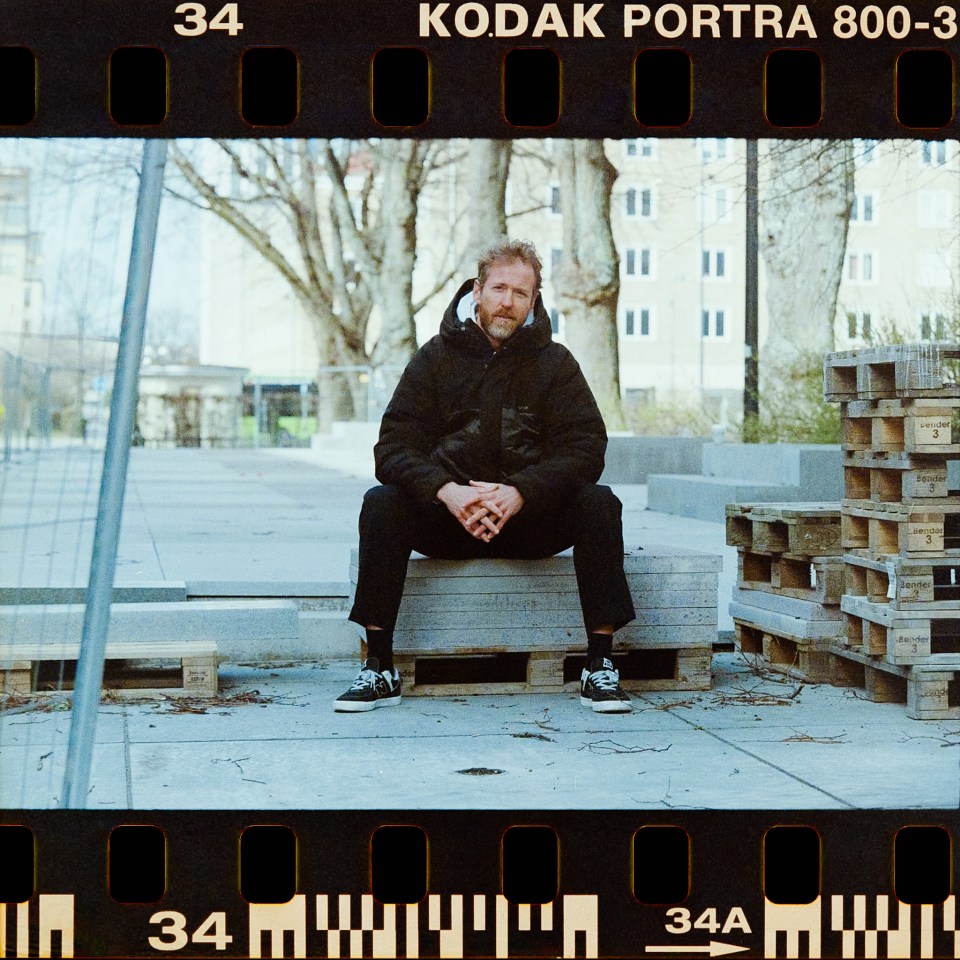
Gustav Eden, with his look of a Viking-son-in-law-type, is a sort of deluxe ambassador for skateboarding.
He holds the improbable job of ensuring that the city of Malmö shines under the unofficial label of a “Skate Super Friendly” City. And it’s safe to say he hasn’t taken his job lightly. His mission, which initially involved organizing a major, rather mainstream bowl contest, has become much more extensive. It now includes creating “legal” street spots, defending skate culture in its various forms, and working within a social and educational context. He even managed to repatriate and rebuild an authentic piece of Philadelphia’s defunct Love Park and brought Ricky Oyola over to do nosegrinds on it.
Tell me how you got this job at the city of Malmö and what it consists of ?
So, I work for the Streets, Parks, and Property Department at the City of Malmö, and my job started as an event planning role—to plan the big skateboarding events.
You might know Quiksilver Bowlriders. When they built the big concrete skatepark, Stapelbäddsparken, in Malmö, the local skaters were in touch with Quiksilver, and Quiksilver moved the contest to Malmö. It was in 2006. When the new park was opening, they were producing this big event. The skaters didn’t know how to produce a big event themselves, so they needed support from the city. So my predecessor, the person who started the skate job, he wasn’t a skater, but he started producing the events with Quiksilver. Then, when Quiksilver went bankrupt, or stopped doing the events, Malmö started producing their own. There was the skateboard organization, Bryggeriet, with the skaters, and then there was one person in the city producing the big events. And I took over that job in 2014.
But when I started, I continued the bowl events in the parks, but also started to do street events in the streets. I always wanted to work with a legacy strategy. So, if we organized an event in the streets, I wanted to leave something behind—to create a new spot. The same money we would spend on an event for one day could then create a spot that would stay forever. So, step by step, over the years, we’ve used events to help the city grow as a skate destination, and that is how my job evolved. So we would do street events in existing spots, but then, instead of having a wooden ramp, we would put in granite benches or a skateable sculpture, and then let that stay for perhaps a month or three months as a trial. And if that worked, we could have it made permanent
So, if we were to do an event in the streets, I wanted to leave something behind—to create a new spot
Tell me about the process of integrating something skateable into a public space, and how it’s validated ?
I work for the city, so I need to get approval from my bosses and so on, and politically, have support for what we do. It’s not about putting a skate spot just anywhere and getting support for it. It’s about putting a skate spot in the right space where people will not complain. And those are design issues. The problems with skateboarding come from noise, damage to materials, and people being scared of it.
If you place skateboarding close to where people can hear it, you have a problem with noise. But if you place it somewhere far away from where people can hear it, then there’s no problem with sound. The same is with materials. If you make a skate spot out of something that breaks, then it’s going to break. But if you make it out of granite or something else, it’s going to last.
The problems with skateboarding come from noise, damage to materials, and people being scared of it.
And people are usually scared of skating where there’s a small amount of space and there’s a competition for that space. If we place skate spaces in open spaces, people have time to see that there are skaters there, and the skaters have time to see other people. There can be a negotiation of the space, and then you don’t have the same reaction. So we are careful about choosing the spaces first.
We don’t necessarily need approval from the citizens. We need to pay close attention to our processes as a city. Our job is to evolve and develop the streets of Malmö, and that is my job. So we have the right to work in the city, but of course, if we create something that draws a lot of criticism, then it’s going to look bad for us.
We need to be respectful of all the other users of the city. It’s not about giving space to skateboarders. It’s about helping spaces be better if skateboarding is there. But there are spaces where skateboarding is very problematic, where I would say it’s a bad idea because there would be conflict, there would be damage, or there are other users that are more important in that space, like elderly people walking.
Yes, sometimes you also have to convince skaters that a spot isn’t suitable, even if it looks like it is.
I think it again boils down to relationships. I think that is the most important thing. Skateboarders are used to being unaccepted in urban spaces, and so the whole identity of skateboarding is shaped around the fact that they’re outsiders. That is good in some ways—it means that people who feel like they’re outside are attracted to skateboarding and can find a home, a culture, and a place to be. And that’s very good because those people can get access to culture and social networks and so on. But it’s not very good when it comes to building democracy.
I think in Malmö, the skaters know that the city is supporting them. So, even if the skaters skate illegal spots, they are probably nicer to security guards than in other cities because they don’t feel that there’s a strong conflict. Whereas in San Francisco or the US, you see how the skaters are being poorly treated, but the skaters are also treating security poorly.
I think in Malmö, the skaters know that the city is supporting them. So, even if the skaters skate illegal spots, they are probably nicer to security guards than in other cities because they don’t feel that there’s a strong conflict.
Do you know about the terrible incident in SF where a security guard was seriously injured in the head during a fight with skaters?
That’s a terrible situation, I think, for everyone involved. As human beings, we relate to a group, and our most core behaviors are, perhaps, tribal behaviors. What makes a society function is trust and a sense of resonance and belonging, and a sense of being part of a collective somehow. So I think working to include skateboarding is one way of also opening the arms of society to communities like skateboarders.
Have you been inspired by the TBS spot or the DIY culture in Malmö?
Oh, absolutely. I mean, a lot of my job is telling the story about what a lot of other people in Malmö have done. A very strong community in Malmö developed a scene, inspired by Portland. There’s a strong connection with Portland, and Stefan Hauser and Mark “Red” Scott, who came and also people from Australia, like Tricky and Dave, who came and sort of taught the local skaters how to build skate parks, and also developed the whole DIY scene. “It’s better to eat bread that you bake yourself.”
The DIY is different than having a skate park served to you because you have created it. It was your ideas. You put the effort in. And in doing so, it means more to you. It’s more meaningful to skate something that was just handed to you. Then it becomes like, “You should just skate here.” It’s almost being told what to do. And so it’s a completely different relationship.
The skaters of Malmö have had a very strong DIY ethos in developing their organization and, of course, the DIY spots. They also want to evolve Malmö as a skate city. And one really important thing that they realized was that there doesn’t have to be a conflict between the interests of the city and the interests of the skaters. You just need to show the city that what is good for skateboarding is also good for the city. And that’s what they understood early on and have worked with ever since—to find common ground. The key is to find where, if you do a project, and it benefits the city, then you’re going to get to do it again, or they’re going to say yes to the next project. And this is very important for skateboarders wanting to help their scene around the world: cities, or the people who work for a municipality, are tasked with treating everyone equally. They are legally obligated to not care more about one sport or activity than another because they have to treat everyone fairly and equally.
We’re talking about how to communicate or work with a municipality. Do you also have the role of showing skaters how to behave with the people around the spots so they don’t get hated?
I work closely with the Bryggeriet skate organization, and they are the representative for the skateboard community to the city. We have a contract with them. They are tasked with that, and so it’s really up to Bryggeriet to communicate to the skaters. But of course, we could use signs or those kinds of communication strategies, but our main way of doing it is working through the skate organization.
Can we talk a bit about the Love Malmö project. How did the idea originally come about?
When it sort of flooded into the media that LOVE Park was going to be demolished, I felt that it was a huge tragedy for the skateboarding world. The skateboarding world was losing one of its most absolutely iconic places. I realized that I felt that loss, and I think that a whole generation of skaters around the world would feel that loss. I could also see the cultural value of LOVE Park to the skateboarding community, but I could also understand how it would be very hard for the City of Philadelphia to understand that value from their perspective. So I could see that there were a thousand reasons why you would redevelop LOVE Park that have nothing to do with skateboarding, but from the skateboarding perspective, it’s a big loss.
So I thought that perhaps there’s a way. Because I’m a colleague to the City of Philadelphia from another city, perhaps I could be a translator. I have friends who are skateboarders in Philadelphia, and so I reached out to them. I also reached out to the City of Philadelphia. The skaters in Philadelphia had succeeded in saving parts of the material already before I called. They paid with their own money to hire forklifts and trucks to save material while the demolition was going on.
I could also see the cultural value of LOVE Park to the skateboarding community, but I could also understand how it would be very hard for the City of Philadelphia to understand that value from their perspective.
They had an idea about making something with it?
The Sabotage crew and the skaters who were very active at LOVE Park at that time went in and measured all the ledges and kept all the measurements in case they wanted to rebuild it. And they managed to appeal to the City of Philadelphia to get some materials, because everything was just going to be destroyed and crushed. But they got permission to save whatever they could, but the city wasn’t going to pay for it. So they found Love Park Heather, a girl that skated and grew up skating in Philadelphia. She paid for forklifts and trucks, and she drove the forklifts herself to save the material and put it in storage.
So there was material in storage, and I contacted the City of Philadelphia. They put me in touch with the organization Skate Philly, because technically, Skate Philly owned the material. Then I went over there and talked to the skaters and essentially said: ‘This is your material, this is your heritage. But maybe it doesn’t seem like you’re going to get it reconstructed here anytime soon. If we could get the material and build it somewhere in the streets of Malmö, we would show the world its value, and it would be in the streets. It would be a section of LOVE Park that would remain, and it would not be a skate park. It would be part of the city. We can offer that, but it has to be okay with you.
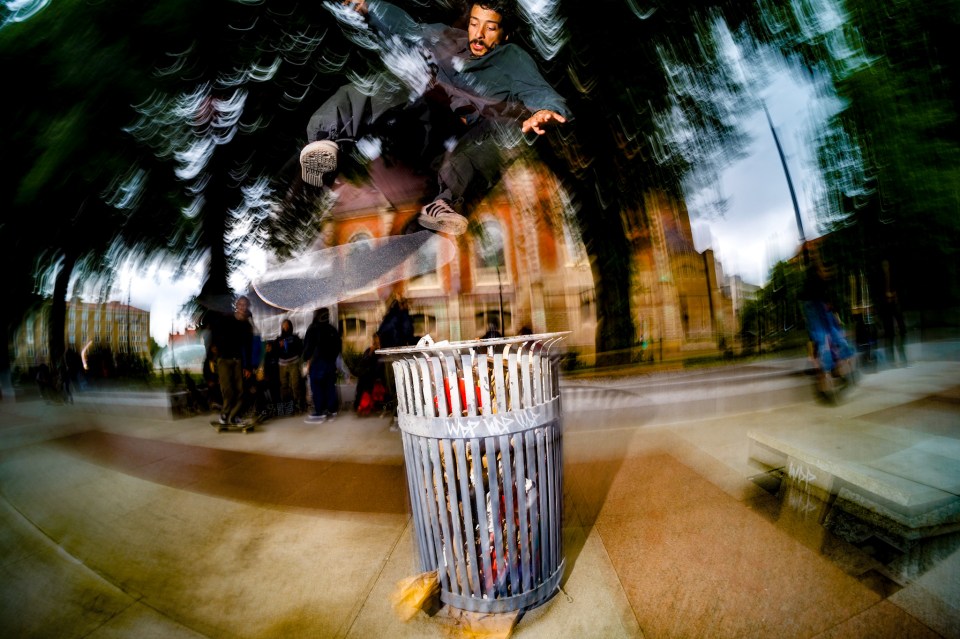
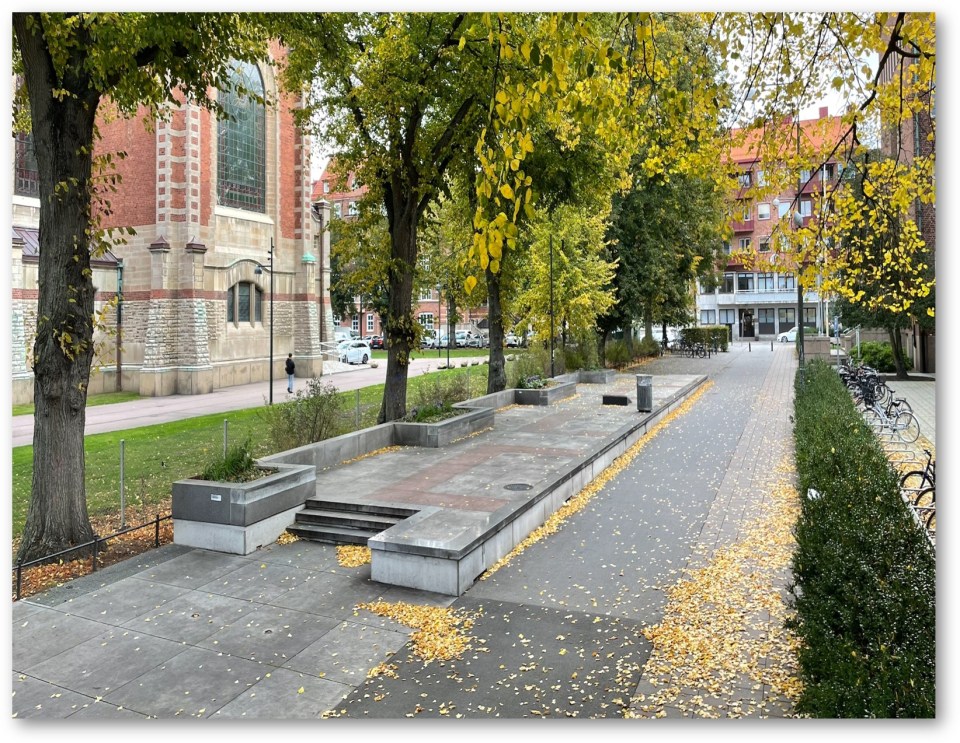
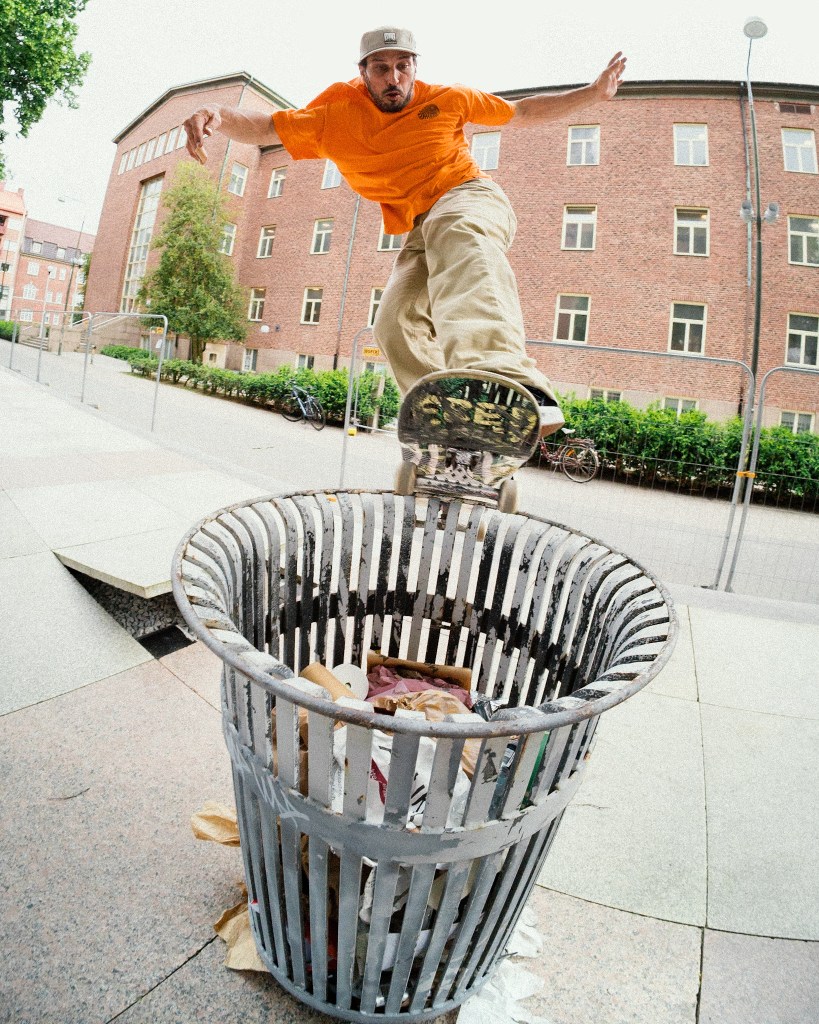
They essentially said that, “Well, it didn’t look like anything was going to happen anytime soon.” So they were happy to give us some of the material. And we took material that they had a lot of, and only generic material—so nothing that had actually been skated. We got ground, some ledges, trash cans, and a lamppost.
How did the local scene react about putting a part of the spot away in Malmö?
I don’t think that too many people in Philadelphia knew about it when the news came out. It was big news for a while in the US; they went around on TV and radio and stuff. The skaters, I think, there were different reactions. I think everyone was just waiting to see how it turned out. And they had to wait for a long time because it took many years to get it done.
You know Josh Kalis has a strong personality. What did he say about this project?
Well, we were in touch with him—not me, but through the skaters who are in touch with him all the time—and we were going to get him out here. We were in touch with both him and Stevie Williams, and in the end, they couldn’t make it. But people like Ricky, Fred Gall, search Janowski, they all came. And hopefully, Josh and Stevie will come out another time. There are a lot of Philly skaters that we would love to come here.
But did you hear something, did Josh say?
No, but he also got some materials from Muni or LOVE Park, right?
Yeah, and that’s from LOVE Park. I think he probably has more than we have, in a way, but he has it in a skate park.
I was wondering if he would buy a house in Malmö.
Haha! It would be cool to have Josh in town, actually.
Why didn’t you put a LOVE symbol?
It’s a Robert Indiana sculpture. There are quite a few of them. It’s made in a series. We have worked on trying to get access to one. But, buying one, I think costs $5 million. This is a piece of art by one of the most iconic pop artists after Andy Warhol.
Out of all the projects you’ve been involved in, which ones are you most proud of?
I would say the LOVE Park project is what I’m most proud of. Because I think what really dawned on me when we did the event was when we got all the Philly skaters out to Sweden. It was clear that they had not seen what impact they had on the world firsthand before. And when we showed them how significant their contributions had been to the world of skateboarding, I think that that was good for them. It was important for them. And that made me feel like the kinds of relationships we build through culture are very important.
The other project I’m most proud of is working with a schoolyard in one of the more isolated areas of… or not isolated, but sort of socially challenged areas of Malmö. They had a schoolyard that hardly had any functionality, and the kids were playing tennis with their hands over a fence, and there was nowhere to play ball. So for the first “Pushing Borders” event, we managed to build not a tennis court, but a ball court, but one that also had transitions around it.
You organized some visits of it right ?
I’ve shown it to people, yeah. And so that is now a part of their schoolyard, and it works for skateboarding. The school can lend out boards, and it’s also open on the weekends and evenings. But it’s also a dance space, it’s also a ball court, and it’s also a skate park.
I think that because just building a skate park is not going to get people into skateboarding, because the thresholds to get into skating are really high—it’s expensive and it’s difficult. So you need many things. You need the products, and you need friends, and you need friends who are on the same level as you so you can progress together. And that means that you need adults around who can facilitate that. And we can do events and we can build places, but we can’t be there all the time. So you need some kind of organization to be there, to be present. And I think that part is challenging, I guess. So I think that was a good project because when the skate event, goes away, then there’s someone there to pick it up.
In the future, what would you like to achieve? Do you have any goals or any projects in mind?
I think skateboarding has really shown an opportunity to show anyone who works with cities how human behavior can help evolve the life of cities. Everything in cities is designed for you, steps are there to walk on, benches are a certain height, trees are there, there’s a bike path, there’s a street, there’s a sidewalk, and then there’s art. But everything… But mainly you’re kind of told what to do all the time. And that means that we become people who think that we should behave in certain ways and not behave in others. And that removes important things. It removes the opportunity to explore, to be creative, to play, to engage with different uses.
We have separated activity from the city by defining it as sports and putting it in a sports, like soccer on a soccer pitch, basketball on a basketball court. And then culture is like paintings in a gallery and sculptures in a park. And so, in order to create order from chaos, we have created a lot of order. But when everything is in order, then there’s no dialogue, and there’s no democracy, and there’s no understanding between different people.
But when everything is in order, then there’s no dialogue, and there’s no democracy, and there’s no understanding between different people.
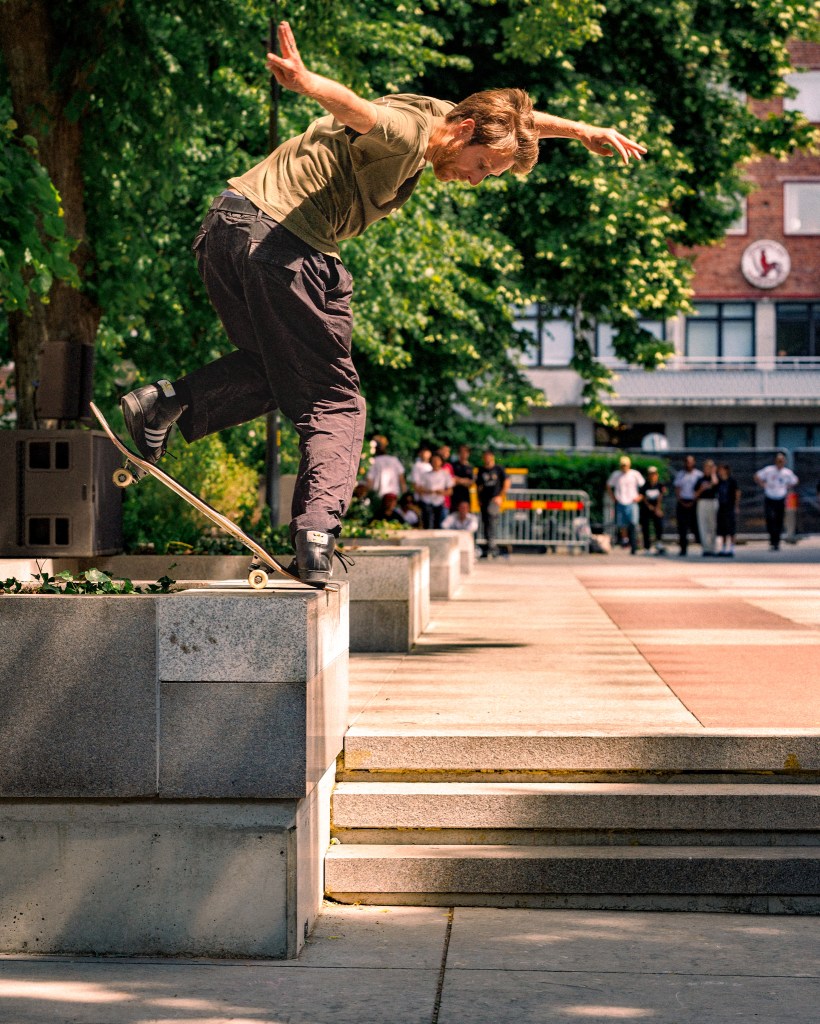
So skateboarders, by essentially changing their body by stepping onto wheels instead of feet, they’re like, “Oh, I can’t walk up this… I can’t roll up the stairs. But I can skate them.” And that means that skateboarders have understood the value of kind of hacking the urban environment to allow for all these other behaviors. And so I think that lesson can be applied to other user groups, too. We can design cities that are open to play, so that our kid can play their way to school, rather than… or if we have, you know, if we want to go for a run, there’s also an art object that you can work out on.
I think that the whole creative interaction with the urban environment that skateboarders so intuitively know could be designed in for other users as well.